
AuraDrama: Short Drama HD
HOANG PHUONG TECHNICAL SERVICES AND TRADIING JSCEntertainment
3.04.00 Reviews
- Version
- 1.0.2
- Installs
- 100.00K
- Age Rating
- Everyone
Screenshots
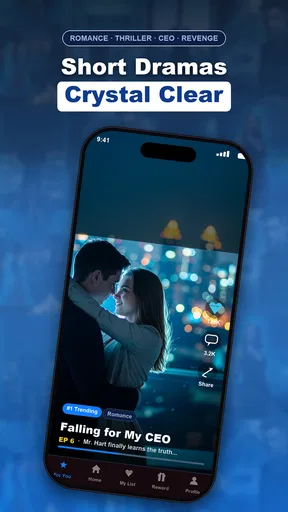
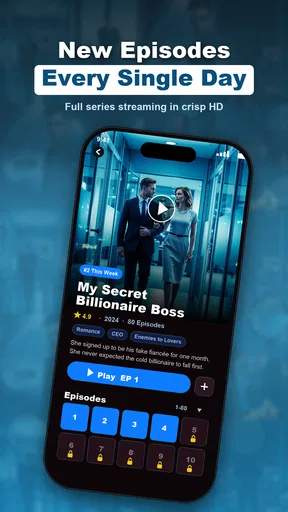
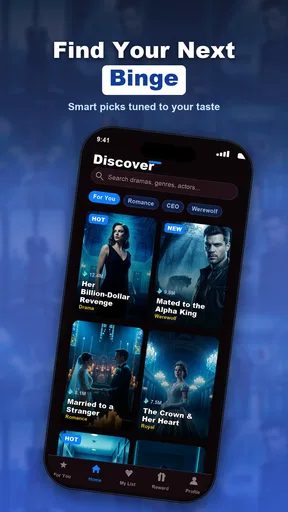
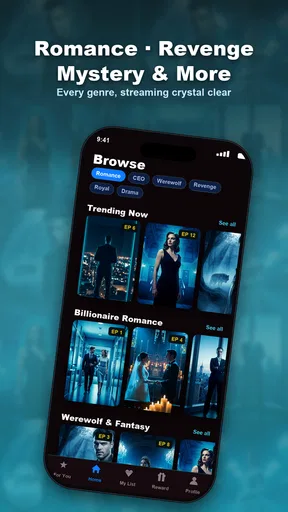
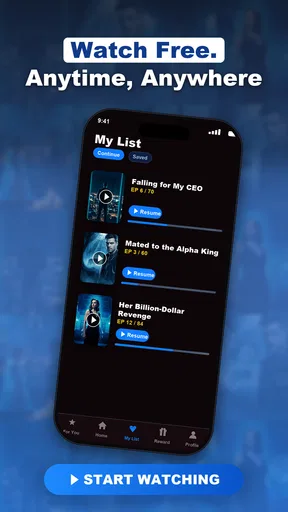
Our Review of AuraDrama: Short Drama HD
 Analysis by Appyee
I tried AuraDrama: Short Drama HD as a lightweight entertainment app for those moments when I want a complete burst of fiction rather than a long film or a full television season. Its focus is short-form drama, presented in HD and designed around frequent episode releases. That sounds simple, but the real question is whether the experience feels comfortable enough to return to every day, especially when an entertainment app asks for attention, screen time, and possibly personal information.
My overall impression is mixed but fairly clear. The app is easy to understand: open it, browse short dramas, and watch when you have a few spare minutes. It is free, aimed at Everyone, and supports devices running Android 7.0 or later. At the same time, the average rating sits at 3.0 from around 58 ratings, so I would not approach it expecting the polish or consistency of the biggest streaming services. I see it as an app worth testing if short serial storytelling is your priority, not as a universal replacement for established video platforms.
What the app is trying to do
The developer, HOANG PHUONG TECHNICAL SERVICES AND TRADIING JSC, has positioned this as an entertainment app rather than a general video library. That distinction matters. The appeal is not necessarily finding every famous movie or a deep archive of television. Instead, the experience is built around short dramas that can fit into small gaps in the day, with new episodes intended to keep the catalog feeling active.
I found that format most appealing when I wanted a quick narrative hook without committing to a two-hour movie. A short episode can work during a lunch break, while waiting for an appointment, or at the end of the evening when I am too tired for something demanding. The episodic structure also gives the app a natural reason to bring me back, although that can become a weakness if I prefer to finish a story in one sitting.
The store summary emphasizes crisp HD playback and daily additions. I treat that as a description of the intended experience, not a guarantee that every title will feel equally strong. Image quality, writing, acting, and pacing can vary from drama to drama, and a short format leaves little room for a slow opening. If the first minute does not establish a conflict or a character I care about, I am more likely to leave than I would be with a conventional movie.
The current version is 1.0.2, which suggests that the product is still relatively early in its development. I would therefore judge it as an evolving service rather than a finished, mature platform. That does not make it unusable, but it does affect my expectations around refinement, navigation, and how smoothly the viewing experience handles different phones and network conditions.
Where it fits in a normal day
My most realistic use case for an app like this is a fragmented schedule. Imagine finishing work, making dinner, and having fifteen minutes before the next task. A short drama can provide a clear beginning and ending to that break. I would open the app, choose a series already in progress, watch one episode, and stop without feeling that I had started a large commitment.
That same scenario reveals an important trade-off. Daily episode releases can create a pleasant routine, but they can also leave the viewer waiting for the next part of a cliffhanger. Someone who prefers complete seasons, long-form character development, or uninterrupted viewing may be happier with a conventional streaming service. AuraDrama is better suited to quick emotional beats and serialized momentum than to slow, carefully layered storytelling.
I also think the app makes more sense on a personal phone than as the main entertainment source for a shared television. Short dramas are intimate, quick, and easy to sample. They do not automatically provide the broad family selection that people expect from a major living-room streaming subscription. If several people need different genres, profiles, and dependable recommendations, a larger service is likely the more practical choice.
Trust starts with what I can actually see
When I review a free entertainment app, I pay attention to more than the video catalog. I want to know what choices are visible, whether the app explains important actions clearly, and whether I can use it without feeling pushed into decisions I do not understand. A free download can still have a cost in attention, advertising, data sharing, or account friction, so I do not treat “free” as a complete trust signal.
In AuraDrama’s case, the public product details establish a few useful boundaries: it is a free entertainment app, it is rated for Everyone, and it has reached over 100K installs. Those details tell me that the app has attracted a meaningful audience, but they do not by themselves prove that the experience will be reliable for every viewer. The modest average rating is a reason to test it personally and to keep expectations measured.
I would also avoid confusing popularity with quality. An app can collect many installs because the concept is appealing while still receiving uneven reactions to performance, content selection, or usability. The rating and review volume make me more cautious, not dismissive. I would install it only from the official app marketplace, examine the permission prompts, and decide whether the visible choices match my comfort level before watching regularly.
That approach is especially important because the app is centered on video consumption. Streaming applications can involve network access, device storage for temporary files, notifications, advertising systems, and account-related controls. I would not assume that any of those are present or absent without seeing the actual prompts and settings on my device. The sensible habit is to read each request when it appears instead of approving everything automatically.
Permissions and account choices deserve attention
My advice is to pause during the first launch and look at every permission request in plain language. A drama viewer should have a clear reason for anything it asks to access. If a request seems unrelated to watching short videos, I would deny it initially and see whether the core viewing experience still works. Android lets users revisit many permissions later, so there is no need to make every decision in a hurry.
I would use the same care with notifications. Daily episodes may make alerts useful, but a constant stream of reminders can turn a relaxing app into another source of interruption. If notifications are offered, I would keep only the ones that help me follow a series and turn off promotional or unnecessary alerts. This is a small control, but it has a major effect on whether the app fits my routine.
Account creation is another moment where I would slow down. If the app allows browsing or watching without an account, I would start there. If an account is required for particular functions, I would check what information is requested and whether the sign-in choice is understandable. I would avoid reusing an important password, and I would not provide extra personal details merely to unlock a basic entertainment feature.
I also recommend checking the device’s app settings after installation rather than relying only on the first-run screen. The system settings can show permissions, notification access, battery behavior, and storage use in a way that is easier to review later. This is not a criticism aimed only at AuraDrama; it is a practical safeguard for any free video app, particularly one that is still developing.
Data-sensitive moments while watching
The most data-sensitive moments are usually not the dramatic scenes themselves. They are the points around sign-in, personalization, notifications, advertising, and playback. I would watch for prompts that ask me to create a profile, save viewing activity, or accept a broad set of choices without a clear explanation. When choices are presented, I prefer to select only what is necessary for the feature I actually want.
I would also think about where and how I watch. On mobile data, short episodes can add up quickly, even when each individual viewing session feels brief. I would check Android’s data-use screen and set a limit if my plan is restricted. On public Wi-Fi, I would avoid entering sensitive account information unless the connection is trustworthy. These habits help separate the enjoyment of short dramas from unnecessary exposure of personal details.
Storage is worth considering too. Video apps may use temporary files or cached images, and a phone with limited free space can become sluggish when several media apps compete for room. I would periodically inspect AuraDrama’s storage entry in Android settings. If the cache grows larger than expected, clearing temporary data is a reasonable maintenance step, provided I understand that it may remove convenience items such as remembered playback positions or downloaded material.
Privacy choices can also affect recommendations. A personalized feed may save time by showing dramas that match my viewing habits, but some people would rather keep their entertainment activity less connected to a profile. I would look for the app’s visible controls before deciding. If the available settings are clear, I can make an informed trade-off. If they are difficult to find, I would limit account use and avoid treating the app as a private diary of my interests.
How much control the viewer really has
User agency, for me, means being able to make small decisions without fighting the interface. I want to choose when to watch, whether to receive alerts, whether to use an account, and whether to continue after an episode ends. I also want the app to make it obvious when I am leaving a title, changing a setting, or moving into a different part of the service.
A short-drama platform can easily encourage automatic viewing because each episode leads directly to the next emotional beat. That is convenient when I am following a story, but it can also make a fifteen-minute break expand without much thought. I would set a personal stopping point before opening the app, especially late at night. If the player offers an autoplay control, I would use it according to my routine rather than leaving it on by default.
I would approach recommendations with a little skepticism. A feed can be useful for discovering a new series, but it is not the same as editorial judgment. If I dislike several suggested titles, I would stop scrolling and search for something specific rather than assuming the whole catalog is unsuitable. The better workflow is to sample a drama briefly, assess its tone and pacing, then decide whether it deserves more of my time.
For parents, the Everyone age classification is reassuring as a broad label, but I would still preview content before handing the phone to a child. An age category does not tell me whether every plot, relationship, or emotional theme will suit a particular family. I would also keep purchases, account settings, and notification controls protected at the device level, even though the app itself is free.
Comparing it with familiar entertainment options
Compared with a general video platform, AuraDrama has a narrower identity. A large video service may offer music, creators, documentaries, films, and long-running shows in one place. That breadth is useful when I do not know what I want, while AuraDrama makes more sense when I specifically want short dramatic episodes. The trade-off is discovery versus focus: the larger service offers variety, but this app may feel more direct for its chosen format.
Compared with a paid streaming subscription, the free price lowers the barrier to trying it. I can test the concept without adding another recurring bill. The compromise is that free entertainment services may feel less predictable in presentation, catalog depth, or controls than a service built around a subscription relationship. I would choose AuraDrama for casual sampling and a paid platform for dependable access to premium long-form viewing.
Compared with social-media video feeds, the short-drama format may provide a stronger sense of narrative continuity. A feed is excellent for quick novelty, but it can scatter attention across unrelated clips. AuraDrama’s episode structure is more suitable when I want to follow characters and remember what happened previously. On the other hand, social platforms often make sharing and discussion easier, so viewers who value community interaction may prefer those alternatives.
Compared with a dedicated television application, the main difference is commitment. A television app is usually designed around seasons, episodes, and longer viewing sessions. AuraDrama’s strength is the smaller unit of time. I would not ask it to replace a full television library; I would use it alongside one, choosing the short-drama app when I want something quick and a broader service when I want a substantial evening watch.
Who should try it, and who should skip it
I would recommend giving AuraDrama a chance to viewers who enjoy serialized drama, have limited free time, and prefer sampling content without paying first. It is also a reasonable option for someone using an older Android phone, since the minimum requirement is Android 7.0 or later. The free model makes experimentation easy, and the daily-release concept can suit anyone who enjoys having a small piece of a story to return to.
I would be more cautious if you need a highly polished, predictable streaming experience. The 3.0 average rating is not a reason to reject the app automatically, but it is enough to tell me that the experience may not satisfy everyone. I would also skip it if I strongly dislike cliffhangers, want a large catalog of famous productions, or expect advanced family profiles and mature account management from an entertainment platform.
People with tight data plans should test playback carefully and monitor usage before settling into daily viewing. Likewise, anyone especially sensitive to permissions, notifications, or personalized recommendations should inspect those controls during setup. The app can still be usable, but the right choice depends on whether its visible settings give you enough control to feel comfortable.
My practical setup before regular use
I would begin with a short trial rather than immediately making it part of my daily routine. First, I would browse without creating an account if that is possible, then check how clearly the app presents its viewing choices. Next, I would review permissions and notifications, test one episode on Wi-Fi, and inspect Android’s battery, storage, and data-use panels afterward. This process takes only a few minutes and gives me more useful information than an install count alone.
I would then choose one drama instead of opening several at once. That keeps the home screen and viewing history easier to understand, and it lets me judge whether the episode length actually fits my schedule. If I enjoy the format, I would enable only the alerts that help me follow new episodes. If the app feels distracting or unclear, I would remove it without having invested much time or personal information.
One useful habit is to separate content evaluation from trust evaluation. I might enjoy a particular story while still deciding not to create an account. Conversely, an app can have clear controls but fail to hold my attention creatively. Looking at both sides prevents a good episode from making me overlook uncomfortable settings, and it prevents one weak recommendation from unfairly defining the entire service.
My cautious verdict
AuraDrama: Short Drama HD has a focused idea that fits modern, fragmented schedules. I like the possibility of watching a compact dramatic episode instead of committing to a full movie, and the free model makes the experiment accessible. Its Everyone classification and support for Android 7.0 or later also make it approachable for a broad range of Android users.
Still, I would treat it as a developing entertainment option, not a proven replacement for the major streaming names. The 3.0 average rating and relatively small review base make a personal trial important. I would pay close attention to permissions, notifications, account prompts, data use, and storage, because those practical details determine whether the app feels respectful in everyday use.
My recommendation is therefore conditional: try it if short serialized dramas are exactly what you want, especially for brief breaks, but keep your expectations realistic and retain control over setup choices. The best reason to install it is its specific short-drama routine, not the promise of being an all-purpose streaming service. For me, that makes it worth testing, while its early-stage feel and uncertain consistency mean I would keep another entertainment option available.
Verdict
Strengths of AuraDrama: Short Drama HD
- Short episodes make it easy to watch during quick breaks.
- HD video quality provides a sharper viewing experience on supported devices.
- The catalog offers plenty of dramatic stories in different themes.
- Simple navigation helps users find episodes and continue watching quickly.
- Frequent story updates can keep the selection feeling fresh.
Limitations of AuraDrama: Short Drama HD
- Many episodes may require coins or in-app purchases to continue.
- Ads can interrupt viewing, especially for users on the free plan.
- Some storylines rely on familiar clichés and predictable twists.
- Streaming HD video can consume considerable mobile data.
- Availability of shows and features may vary by region or device.
Similar Picks in This Category
View All
Google Play Games
Google LLC3.9

Netflix
Netflix, Inc.4.8

YouTube Kids
Google LLC4.2

Disney+
Disney4.4

Prime Video
Amazon Mobile LLC4.7

Steam
Valve Corporation3.2
Frequently Asked Questions
What is AuraDrama: Short Drama HD, and what type of content does it offer?
AuraDrama: Short Drama HD is a mobile entertainment app focused on short-form dramatic series and bite-sized episodes. Its catalog is designed for viewers who prefer quick stories with romance, suspense, family conflict, and emotional twists. Episodes are generally structured for convenient phone viewing, making the app suitable for watching during short breaks, although the available shows, genres, and episode lengths may vary by region and app updates.
Is AuraDrama: Short Drama HD free to download and use?
The app may be free to download, but access to all episodes or premium content can depend on the platform’s monetization model. Some dramas may be available after watching advertisements, while other episodes, features, or early releases could require in-app purchases, coins, subscriptions, or another payment method. Before watching extensively, review the pricing, trial terms, and renewal conditions shown in the app store and inside AuraDrama.
Does AuraDrama: Short Drama HD require an internet connection?
AuraDrama: Short Drama HD is primarily intended for online streaming, so a stable internet connection is normally necessary to browse the catalog and play episodes. Performance can depend on Wi-Fi or mobile-data quality, and extended viewing may use a significant amount of data. If the app provides downloads for offline viewing, check whether that option is limited to selected content, premium users, or a specific period.
Is AuraDrama: Short Drama HD suitable for children and teenagers?
The app should not automatically be considered suitable for children simply because its episodes are short. Drama series may include mature themes such as romantic relationships, betrayal, violence, emotional conflict, or suggestive dialogue. Parents and guardians should check the age rating, read the content information where available, and review the shows before allowing younger viewers to use the app. Device-level parental controls can also be helpful.
What should I check before downloading AuraDrama: Short Drama HD?
Before installing AuraDrama: Short Drama HD, check that your Android or iOS device meets the current compatibility requirements and has enough free storage for the app and possible cached videos. It is also worth reviewing recent user feedback, requested permissions, privacy information, subscription pricing, and cancellation rules. Availability of specific dramas, languages, subtitles, payment options, and features may differ depending on your country and device.
